

Throwaway Style: Love in Hell Shall Have Their Revenge
The Portland twee-punks wield short songs packed with the dynamite of a songwriter who has a lot to say.

It is finally here: The long-awaited first edition of Trick Bag’s Throwaway Style! Allow me to take care of some business first: Since Love in Hell, the featured artist for this column—still the longest Pacific Northwest music column running today—will be playing the very first Throwaway Style Showcase at Sunset Tavern tomorrow night (along with Throwaway Style Hall of Famers Wimps and myself on the 1s and 2s), I just wanted to let you know that if you live in or near Seattle, tickets are still available for what I humbly suggest might very well be Seattle’s punk show of the year. Hope to see you at the Sunset tomorrow!

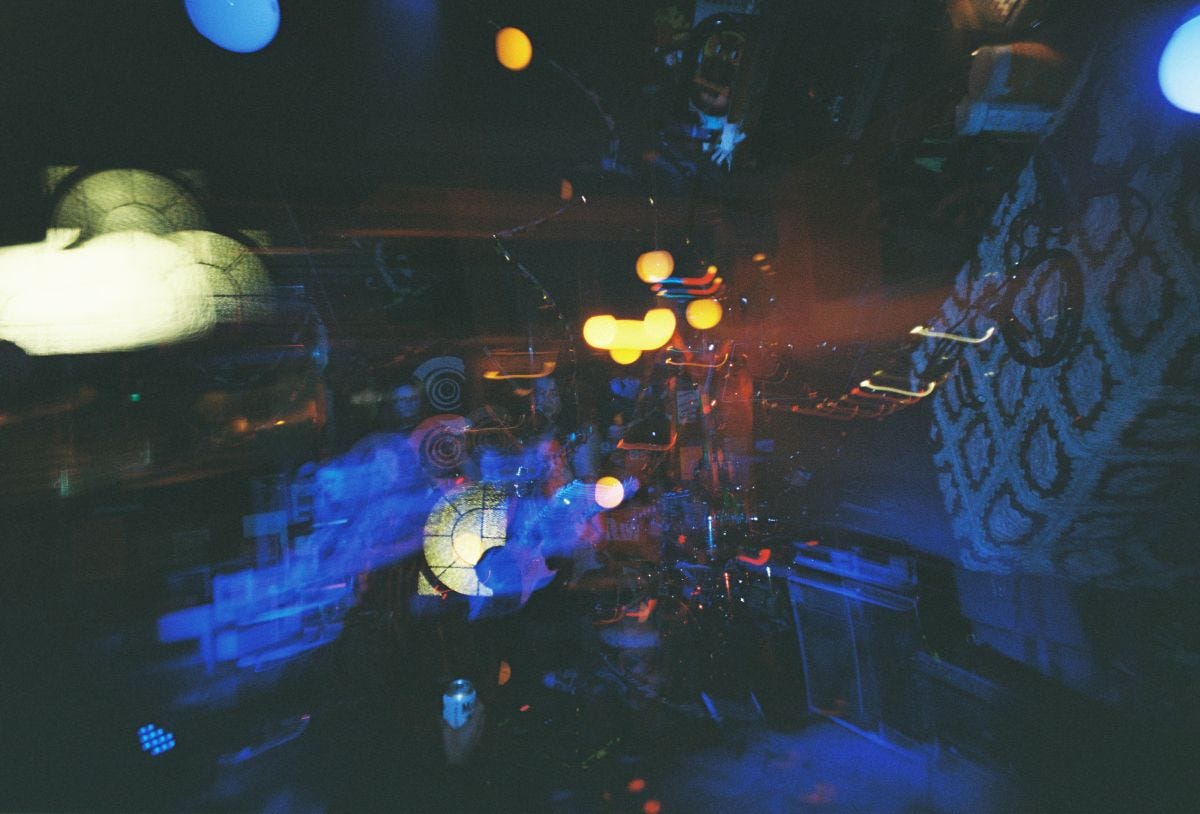
While at brunch with my fiancée—some clichés I simply cannot resist when I’m in Portland—I received a text from Love in Hell singer/guitarist Rose Lewis asking to push back our interview by an hour. The band was clearing their practice space at the moment because it had been flooded…for the third time in 10 months. Another inconvenience in the run of another great punk band.
Movies, fictional or otherwise, about punk bands always sensationalize the story; the “sex, drugs, rock ‘n’ roll” of it all. But this is the stuff those films miss. The tour van running out of gas on the side of a two-lane highway, the practice space getting flooded. Spending hours having to sift through ruined drum rugs and dry out gear. Booking shows or being booked for shows by friends. Later, we will attend a fundraiser gig for a few members of the community unable to leave their house under threat of ICE capture and potential deportation—where Love in Hell will play a scorching, immensely fun set.
But before they get to the gig, Love in Hell must first endure hours of moving their shit out of their practice space and a 70-minute interview with yours truly.
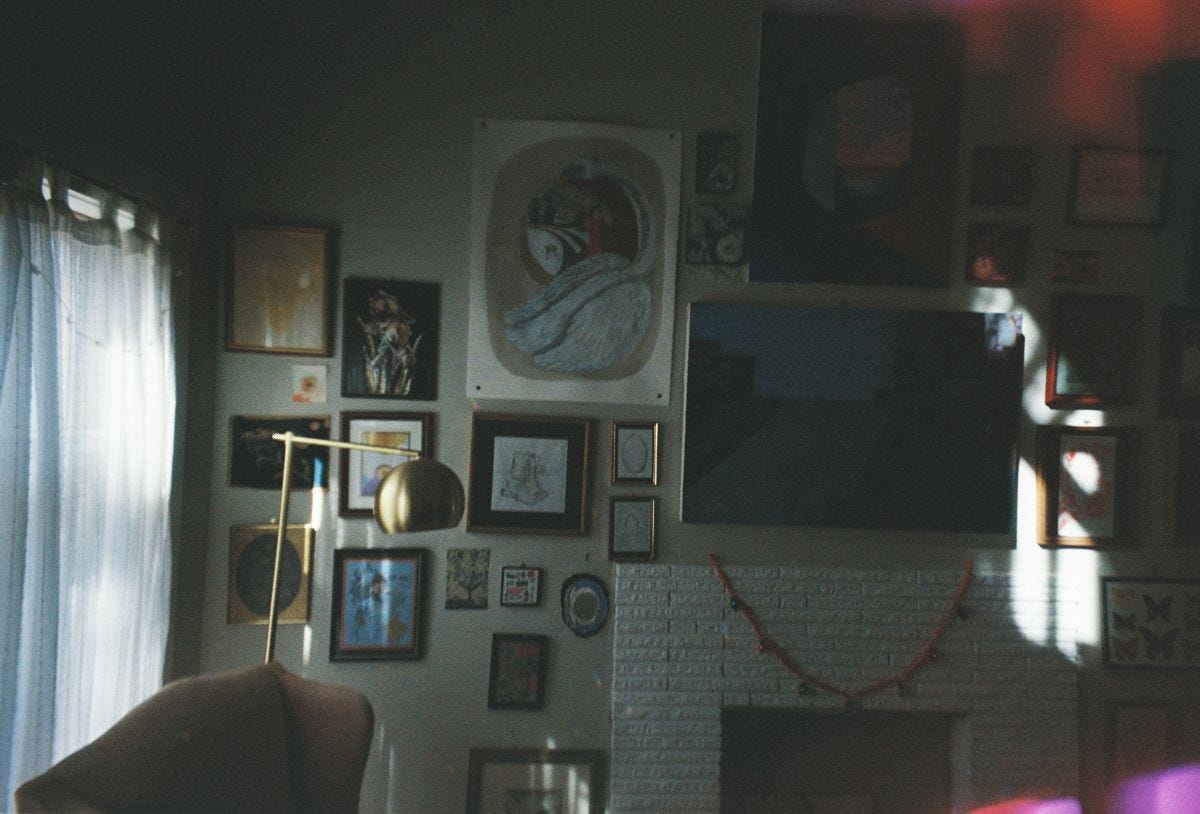
Sitting at the dining table in Rose’s SE Portland home [Writer’s Note: It feels weird to be professional and refer to someone I’ve been pals with since about 2011 by their last name] along with bassist Erin Holcomb and drummer Sam Whitelaw (both of whom contribute backing vocals) our conversation starts not at the beginning of their journey, but the events of earlier in the day.
Mercury retrograde has in and of itself become a cliché, especially for seasoned tarot/astrology girlies like me and Rose, but sometimes it hits exactly the way everyone expects it. On this March afternoon, I had already experienced several travel delays getting to Portland the day before (March snow in Seattle!), which made Love in Hell’s practice space disaster funny in a rueful, Murphy’s Law sort of way. “We’ve been in this space for a long time,” Rose says. “And it’s very slumlord-y; it’s an old, converted cement plant headquarters. In May of last year, it flooded twice in one weekend. We think that time it was the toilets, so it was extra disgusting.”
I was given a very detailed account of this practice space and the problems various musicians have had with the owner of the building, including the fact that in the days before the flood, Portland suffered no less than 48 hours of atmospheric river action. “We got a bunch of anguished texts this morning, and luckily, due to the previous flooding and the owner’s mismanagement of that, we were able to save most of our stuff,” Rose says.
The band were already in the process of finding a new space, and will move into a new one at the end of March. They shared their practice space with Sonia Weber of Portland’s highly-regarded melodic punks Alien Boy; just one of the ostensibly miserable, soaking wet punks on that Saturday morning.
“The funniest and most surreal detail,” Rose says, “is that when Sam and I showed up, the top floor of the building was not flooded—and so there was someone playing Van Halen’s ‘Hot for Teacher’ super, super loud with all the windows open. So we were like, ‘Cool, this is a good loading soundtrack.’” Riotous laughter erupted at the table.
“Meanwhile,” Erin adds, “the people in the basement were spelunking to get all of their gear in shin-deep water.” She also notes that she was in the same building years ago with a different band and their space was broken into and a bunch of their stuff was stolen.
“It was a beautiful display of solidarity,” Rose concludes, “of everybody moving their shit out at the same time and all of us being like, ‘Never again.’”
As their efficient response to their reportedly mismanaged practice space should attest, the members of Love in Hell are all punk scene lifers, having played in many bands prior to this current, Rose-helmed iteration. Rose has been in no fewer than half a dozen bands since we became Tumblr friends a decade and a half ago. She hails from Boulder, Colorado, where she formed a folk punk trio called Rose and Her Bros. She moved to Portland to attend Reed College as a self-described “assigned teacher’s pet at birth”—saying, “I think my folks would be more on board with me moving away to dedicate my life to punk rock if I kind of pretended to go to college.” At Reed, she ended up meeting stevie, the dearly departed musical genius, Northwest DIY music stalwart, and creative engine for the spectacular Mope Grooves.
A variety of different bands led her to Dials, which Rose describes as “very serious, very political post-punk.” The band was gaining steam, but Rose says it was the least involved she had ever been in a band’s songwriting process. It was exciting for her, but also a situation that would take up all of her time as a musician.
Around this time, Rose and Sam had been jamming, just for kicks, every week for a year, as a way to revive their joy for playing music. “I had a really stupid song about robo-tripping at the pinball arcade up the hill from my hometown that I don’t think I can have my very serious, political post-punk band play. And so Sam and I, I think we started jamming in the first place because we both liked Dead Milkmen—but we also liked Belle and Sebastian-like twee bands.”
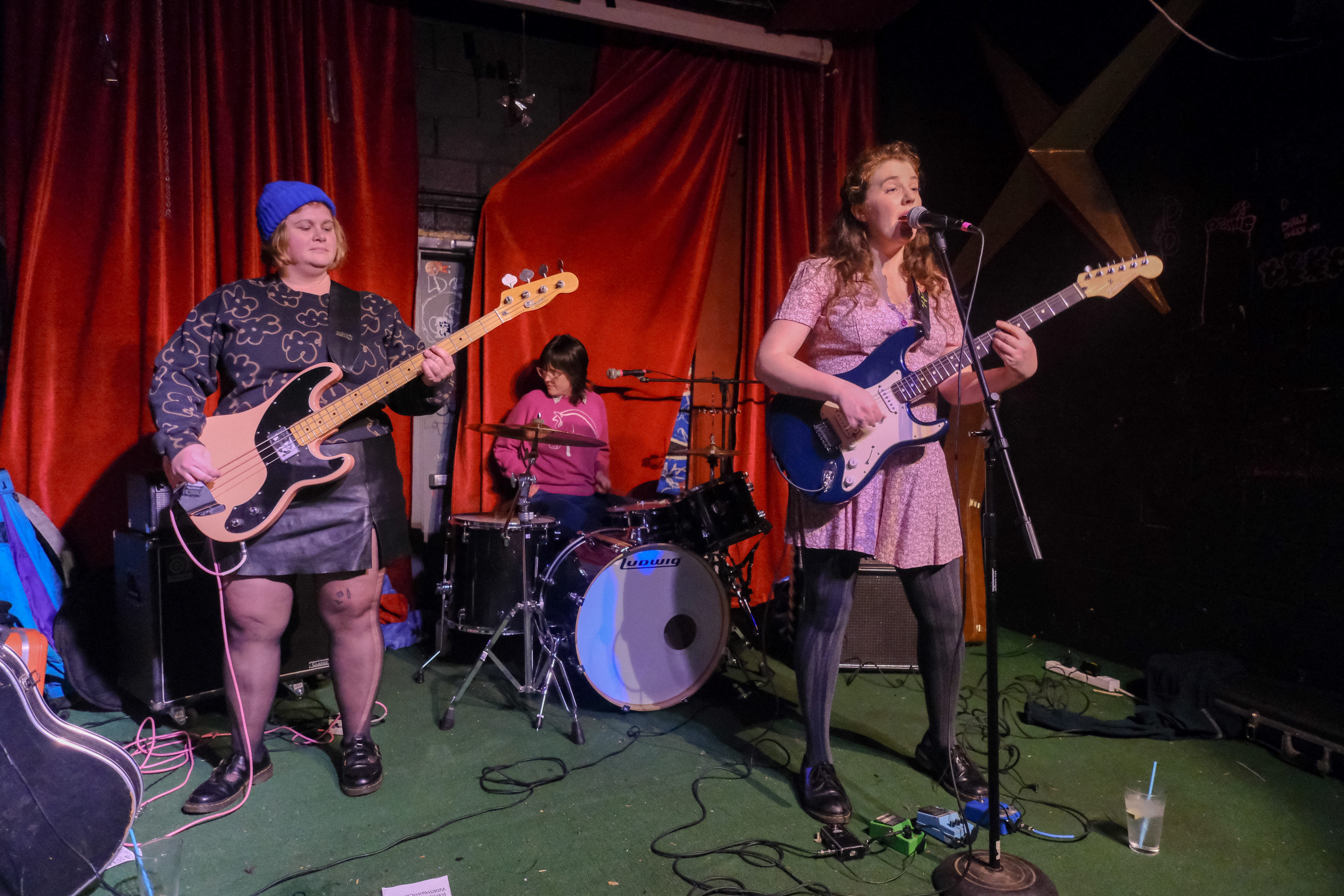
Sam Whitelaw grew up in Baltimore, Maryland; not too far from the Francis Scott Key Bridge—named after the man who penned the United States’ national anthem—which collapsed in 2024 after a container ship hit one of its piers. She describes her parents as strict, at least when she was a kid; her father worked at a steel mill when she was a child. Sam didn’t often attend shows when she was younger, as, naturally for a place like Baltimore, hardcore ruled the day. “A lot of gym-shorts-hardcore and ‘boys club’ kind of stuff,” she specifies.
Sam formed a band in her twenties with some friends after teaching herself how to play drums. The precedent to this activity was a friend complimenting her rhythm while playing the generational touchstone video game Rock Band. The band was called Crimson Wave—taken from a famous quote from 1995 teen movie classic Clueless—which she describes as “bummer pop, which I feel was really popular at the time. So we would get to play Ottobar a lot.”
She played in a few other bands, including Post Pink (who scored a track review in Pitchfork, written by the great Laura Snapes). When she moved to Portland in 2018, she co-founded the punk band All Hits, whose sole LP, Men and Their Work, was released on the venerated Seattle imprint Iron Lung Records. “But unfortunately,” Sam says, “[the band] fell apart during [COVID] lockdown. We came out with this album that did really well and sold well, and then we just never got to tour it or anything, which was a bummer.”
Love in Hell had, by Rose’s estimation, two practices with a different bass player when Corby Plumb—Portland DIY impresario and, according to Rose, “the fifth Beatle of our band”—booked them for a benefit show he was putting together in two months. The band also didn’t have a name yet. At that first show, Rose says, “I was essentially wearing a plastic tablecloth made into a dress” in the middle of a July heatwave, the band eventually went with Love in Hell.
“We did have ideas for band names and we came up with Love in Hell, because we all enjoyed David Lynch’s Wild at Heart,” Sam says.
Rose continues: “Someone asked him what the movie was about and he was like, ‘It’s about finding love in hell.’ And it was like, ‘That is cool.’”
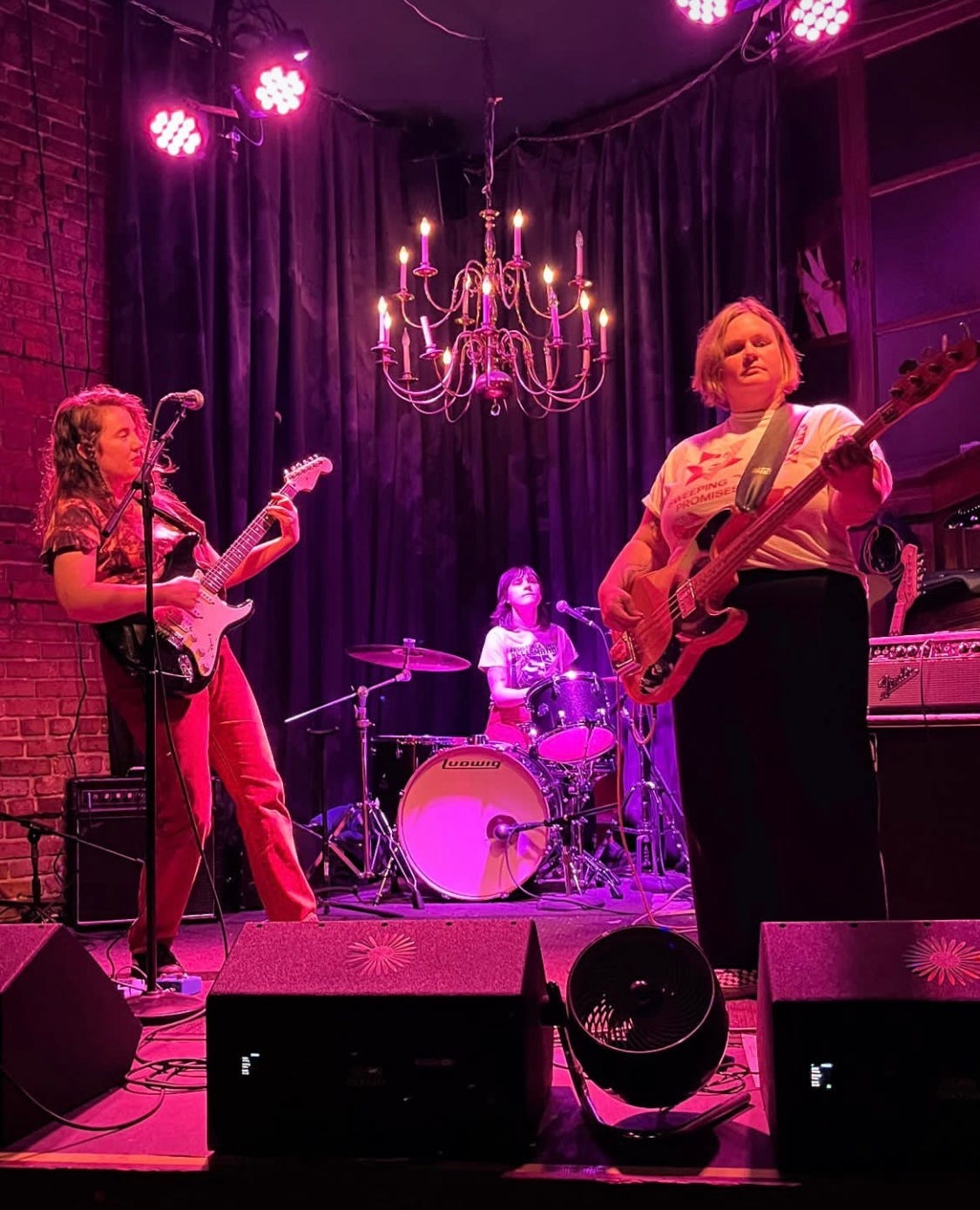
Erin Holcomb grew up in Memphis, Tennessee, with a mom who played The Velvet Underground & Nico on her home stereo and a dad who played Nirvana while driving her to school. A child also weaned on alternative rock radio, Erin became more invested in punk music and culture when she moved to Portland (and into a punk house) in 2009. She learned how to play bass when a guy she was dating moved to New York City in 2015 and left her a bunch of stuff, including a bass cab, and a friend taught her the instrument.
Like Rose and Sam, she played in a number of bands with short shelf lives, notably for bass-driven post-punks Way Worse—which, like Rose and Sam’s previous groups, fizzled out during pandemic lockdown. Sometime after, the founding members of Love in Hell asked Erin to join the band.
“I like playing music because growing up, I was always a perfectionist and wanted to do things right,” Erin says. “And I feel like music pushes me to be like, ‘It’s okay if I make mistakes.’”
Rose says in reply, “I feel like that sums up a very uniting philosophy of us as a band. For one thing, I think that contributes to this being the chillest band I’ve ever been in. We genuinely enjoy each other’s company, and we don’t have conflict about anything because we’re all on the same page, which is really nice.”
The chemistry is evident on Love in Hell’s 2023 demo, five songs that conjure a random cassette demo lost to the sands of time—the A Scene in Between caption would read: “Unknown twee punks, Glasgow 84”—with a dash of Dead Moon grit for a little Pacific Northwestern flavor. As to be expected for a songwriter with a degree in Russian Literature, Love in Hell’s songs are lyric-forward and bursting at the seams with rapidly-moving imagery.
Demo opener “Enya”—titled after one of Rose’s musical heroes—starts as a tidal wave of overwhelm, exemplified by the couplet, “Is the plastic in your face wash carpeting the ocean floor / Have you given every ounce? Can you give a little more?” As the emotional tide washes away in the song’s coda (which is also the song’s musical climax in a brilliant stroke of irony), Rose sings of spacing out to Pure Moods commercials and dreaming of utopia soundtracked by the titular new age icon.
When speaking about the aesthetic of the band, Sam noted she had always wanted to play in a group with layered singing like Grass Widow (Erin later says the reference is what drew her to the band prior to joining); she also cites Slumberland band Veronica Falls as a band she loved and picked up cues from. “We would be really nerdy about indie pop,” says Sam. “We did a Dolly Mixture cover at some point. ‘80s U.K. indie punk was definitely something I thought about [when we started the band], but it’s never like, ‘We want to sound like this.’ It was more, ‘This is what I like.’ It’s not about what the music needs to sound like, but reflective of what we like to listen to.”
Rose and Sam traded playlists when they first started jamming. Some key names represented were the Mo-Dettes, the Gizmos, Tiger Trap, the Babies, Black Tambourine, Lisa Prank, Unrest, the Primitives, the Flatmates, Times New Viking, Big Star, the Bats, Institute, Curtis Mayfield, and ESG. Just to name a few.
In terms of Love in Hell’s proverbial mood board, Rose references Squeeze in our interview, which reminds her of springtime on this gorgeous afternoon…while I thought of driving south through a state covered in snow the day before. She also cites Flying Nun bands, the Clean in particular, whom Love in Hell have covered in the past. “I feel like having a little element of humor, having some sort of narrative depth in songs, was important,” Rose says. “Being political without being too gloomy. Although we lean into the gloom in a few moments.”
On their demo, Love in Hell (through Lewis’s deft lyricism) sometimes balance gloom and levity, or at least hope, on the same song. “Capital/Utopia” splits the difference between the world we live in and the world we could live in, building the entire song up to its penultimate line: “There is another dimension if we make it so.”
“Bad Times Frozen Custard,” the song about mixing cough syrup and malt liquor at the arcade that Rose deemed too silly for Dials, was earmarked early on by Love in Hell as “the hit,” they tell me with a wink. The song itself is catchy and winsome; mixing melancholy with misadventure, drunk in the snow and later bored because the protagonist “don’t wanna shoot the shit or shoot some pool with a bunch of jerks I didn’t like in high school.”
It’s so good, it was one of two songs (along with “Worthwhile”) that the band rerecorded for their self-titled EP.
Recorded at Falcon Studios with Sklyer Pia in two afternoons, Love in Hell wonderfully captures the catchy immediacy of the band and hones in on Rose’s strengths as a songwriter by putting her voice front and center in the mix. And for anyone who thinks the comparatively slower tempos signal a shift away from their punky indie pop forebears, Rose plays glockenspiel on two of its songs, “I’m on the Bus” (an excitable but sort of crabby ode to the most public of public transportation) and “Coronation Chicken” (a half-nursery rhyme, half-ska jam about British imperialism, with a little shot at Johnny Lydon for posterity).
“I feel like Skyler got the memo,” Sam says about the self-titled cassette’s producer honing in on the sound the band was going for. “Here are the bands that we like and how we’re thinking we would like it to sound. And she put on music as we were getting set up.”
Rose says, “It was delightful. We showed up and she was like, ‘I was listening to the Undertones last night,’ and we were like, ‘Perfect.’”
This was after mistakenly going to the wrong location at first. Their studio time happened to be during Mercury retrograde.
Love in Hell’s eponymous EP opens with the banger “I Hate,” which Rose notes was written when Portland had a much, much worse city council than they currently do. “Some of it is better,” she says. “Some of it’s the same. I really want to track down our former mayor and just sit with him in a diner, like Robert DeNiro in Heat, and just be like, ‘What were you getting out of our correspondence? What did it mean to you? Because I was insane and angry, but what was your emotional payoff for arguing with me—a random nobody who was never going to agree with you?’”
“I Hate” was a way to turn frustration into catharsis through art; an irresistible punk tune about loving your city and hating the people who run it, referencing the Spits, Minutemen, and Portland punk pioneers Neo Boys. A handful of Democratic Socialists were elected to Portland City Council shortly after Love in Hell began playing “I Hate” at shows, which feels like a light form of manifestation.
“I’m glad that he is taking a nice, long breather from public life,” says Rose of Portland’s former mayor. “I don’t think that lifestyle suits him. He should go back to owning a Blockbuster Video.”
“The Foxes Shall Have Their Revenge on Bryan Ferry” is a jaunty, midtempo number deeply rooted in the Roxy Music singer’s ties to far-right foxhunting enthusiasts. Rose explained a little to me during the interview and a lot in an email she sent about a week later. There is no way a quaint summary on my part would do this story justice, so here is an excerpt of the email Rose sent about the song:
I got interested in Bryan Ferry as a dude rather than just as a songwriter because the interview with his ex-wife, Lucy Birley, in the book Women in Clothes, was so weird and so good. She was a model when they met and became a photographer later in life, especially after their divorce, and had a lot of wonderful, poignant stories about her long friendship with the late Isabella Blow. I later learned that Lucy had been friends with Nancy Mitford’s niece, Lady Sophy Topley, presumably through their mutual interest in hunting and other “countryside” activities. Lucy and Bryan’s oldest son, Otis, became the youngest ever master of foxhounds for the South Shropshire hunt, and has been involved in a lot of really bizarre incidents as a result, like trying to storm Parliament to stop an anti-hunting bill from passing, or being present at the scene of the crime when a hunter was accidentally decapitated while trying to stop an anti-hunting activist from filming illegal hunting. Otis Ferry also dated Alice Manners, the daughter of the very conservative Duke of Rutland, a guy so excited about Brexit that he flew the confederate flag atop the rafters of his castle when it happened.
All of this made me wonder what it must feel like for Bryan, a working class person from Newcastle whose father had looked after pit ponies in the mining industry, to have to assimilate himself into this bizarre posh world full of foxhounds and being presented at court. I basically made a giant conspiracy theory string map of all these weird connections between people and never really knew what to do with this information until someone, presumably Brace, tweeted from the TrueAnon account that it should be legal to hunt Englishmen like foxes, at which point I knew it was my destiny in life to write a song about hunting Bryan Ferry for sport.
Love in Hell, to be certain, is a tour de force for Rose as a songwriter, but Sam and Erin, the band’s rhythm section, is the backbone of the band; giving the jangle and rush of words a pulse, a countermelody, and a foundation that emblematizes the infectiousness of Rose’s skillfully written songs.
A new album is in progress, but the members of Love in Hell are busy, working adults. Rose is in grad school, playing music (including solo shows), opening exhibitions, organizing community art events, and somehow finding time to sleep. Sam had her thyroid removed at the top of the year and has been taking time to convalesce and decompress from a stressful year. Erin is a set costumer for films (and owns her own vintage store); at the time of our interview, she had recently returned home from a monthlong shoot in Bend.
Toward the end of our interview, I asked the band if they were goal-oriented. Sam was the first to answer: “At a younger point in my life, I was, but not in my late-thirties. I like to be cozy.” She finds her career as an early childhood special education teacher to be incredibly rewarding. “As a Libra, as you may or may not know [Writer’s Note: Sam and I definitely chatted about astrology off the record], I feel it’s nice to have a job that restores my faith in humanity and doesn’t make me hate everything about the world.”
Sam’s goal for Love in Hell is to have longevity as a band. All three members would like to play more shows outside of Portland (the Bay Area, New Zealand, and Japan were all listed as dream destinations).
“In previous bands,” Rose says, “I think I had more conventional ambition. I got to play fancy venues, but those larger spaces were alienating. There’s a weird separation between audience and performer in a way that feels artificial and stressful to me. I so much prefer to play a friend’s basement or Le Voyeur.”
As I left Rose’s home and said goodbye to the band, I thought for a good, long while about how fortunate I feel to be in community with other punks—about the way I feel seen and understood around immensely creative people who share my values. And how although the major cities in the Northwest are always ever-changing, the principles of the best punk rockers don’t.